O2VEND Retail ERP
  • Product
  • Solutions
  • Resources
    • Blog
    • Community
    • Partnership
    • Find Partner
    • Developer
  • Pricing
  • Docs
    • Getting Started
      • Channels
        • Sales Channel
        • O2VEND to O2VEND Channel
        • Shopify Integration Guide
    • Commerce
      • Ecommerce
      • POS
      • Agent App
      • CMS
      • Themes & Apps
      • Apps
        • Sales Navigator
    • Operations
      • OMS
      • WMS
      • O2C
      • Vendor Portal
      • Supplier Portal
    • Back Office
      • Accounting
      • Reports
      • PIM
      • Communication
      • Back Office
Search Results for

    Show / Hide Table of Contents
    • Retail ERP Back Office Overview
    • Back Office Dashboard
    • Analytics & Reports
      • Visitor Analytics
      • E-commerce Analytics
      • Product Analytics
      • Campaigns Analytics
    • API & Webhook Integration
      • Webhook
      • Examples of JSON format data via webhook
      • Testing webhook
    • Back Office Settings
      • Settings Overview
      • Store Settings
        • Business Details
        • Tax Classes
        • Tax Rates
        • Operating Countries
        • Operating State or Province
        • Branches
        • Sales Channels
        • Return Rule
        • Back Office Print Detail
        • Download Template
        • Order Numbering
        • Push Notification
      • POS Settings
        • Quick Add Buttons
        • Print Settings
        • Payment Methods
        • Delivery Settings
        • Language
        • POS Offline Mode
      • Agent App Settings
        • Agent App Print Details
      • Stock Settings
        • Unit Of Measure
        • Location
        • Unit Of Measure Conversions
        • Stock Levels
        • Sub Location
        • Print Barcode Label Settings
        • Package Material
        • Delivery Zone
      • User Settings
        • Vendors
        • User Date Setup
        • Employees
        • Vendors Commission
        • Credit Rules
        • Automatic User Code
        • User Authorization
      • User Role Mapping
        • Set Up Employee Roles
        • Ecommerce
        • Point Of Sale
        • Back Office
        • Sales App
        • Roles
      • Loyalty and Promotions
        • Reward Points
        • Coupons
        • Gift Vouchers
        • Offers and Discounts
        • Benefits
        • Affiliate
        • Coupon Print Setting
      • Account Settings
        • Financial Year
        • Voucher Numbering
        • Sales Account Map
        • Voucher Numbering Rules
      • Integrations
        • Shiprocket Configuration
        • Shipway Configuration
    • Profile

    O2VEND Sub Location Setup Guide

    Efficient warehouse and inventory management starts with proper sub-location configuration.
    In O2VEND, you can create, assign, and manage sub-locations within warehouses to track and move stock accurately.


    How to Set Up Sub-Locations in O2VEND

    To configure sub-locations:
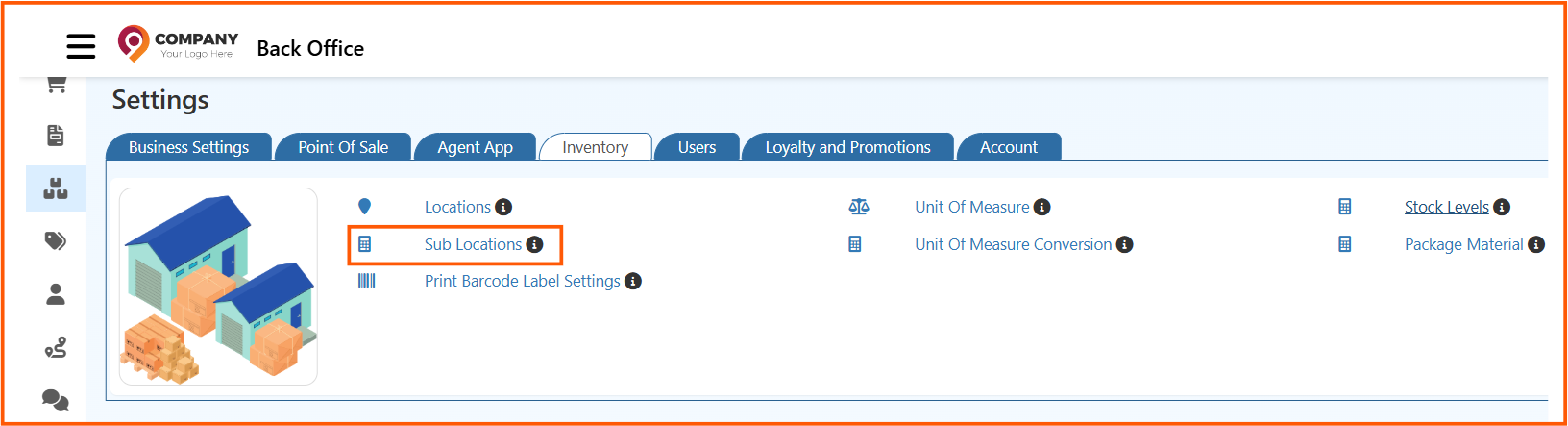
    Back Office → Settings → Stock Settings → Sub Location

    Key Features of O2VEND Sub Locations

    1. Create and assign sub-locations to specific warehouses.
    2. Update product sub-locations manually from the Product section.
    3. Use the Stock Transfer feature to move products between sub-locations.
    4. Assign specific quantities to sub-locations during transfers, receipts, and shipments.

    Creating and Assigning Sub-Locations to Warehouses

    Follow these steps to set up a new sub-location:

    1. Open the Back Office.
    2. Go to Settings → Stock Settings → Sub Location.
    3. Enter a Sub Location Name (e.g., Bin 1, Rack A1).
    4. Select the Sub Location Type.
    5. Associate the sub-location with a Warehouse Location.
    6. (Optional) Choose a Parent Sub Location if you want to create a hierarchical structure (child sub-location).
    7. Click Save to finalize the setup.
    O2VEND Sub Location Setup Guide

    Updating Product Quantity in a Sub-Location

    You can update stock quantities for each sub-location directly from the product catalog.

    Steps:

    1. Go to the Back Office → Catalog → Products.
    2. Click the Update Quantity icon for a product.
    3. Select the required Sub Location.
    4. Enter the Quantity and press Enter.
    5. Click Save to apply changes.

    Transferring Stock Between Sub-Locations

    The Stock Transfer module allows you to move inventory efficiently between sub-locations within the same warehouse.

    Steps:

    1. Go to Back Office → Inventory → Stock Transfer.
    2. Select the same location for both From and To Location.
    3. Set Deliver and Receive Items to True.
    4. Choose the products to be moved.
    5. Specify From Sub Location and To Sub Location.
    6. Enter the transfer Quantity.
    7. Click Save to complete the transfer.

    Adding Quantities to Sub-Locations in Purchase Invoices

    When receiving stock, you can assign product quantities directly to sub-locations.

    Steps:

    1. Go to Back Office → Voucher → Purchase.
    2. After creating a purchase, click Goods Received.
    3. Choose the Sub Location for each product.
    4. Enter the Received Quantity.
    5. Click Save to update inventory.

    Viewing Updated Stock Quantity and History

    Track your sub-location stock changes for complete visibility.

    Steps:

    1. Go to Back Office → Inventory → Stock History.
    2. View updated product quantities by sub-location.
    3. Open the Stock Quantity section to verify real-time updates.

    Benefits of Using Sub-Locations in O2VEND

    • Improves inventory accuracy and reduces stock discrepancies.
    • Enables faster picking and stock tracking.
    • Supports multi-bin and multi-location warehouse structures.
    • Enhances inventory visibility for better decision-making.
    In this article
    © 2019-2026 Jeyan Technologies Private Limited • www.o2vend.com • Create your own store